Amatha Hillayah Font Review: A Chic Script for Branding
I was staring at a blank brand board last Tuesday, tasked with refreshing the visual identity for a small-batch skincare line. The client wanted something that felt handmade and intimate but still carried enough weight to sit confidently on a premium shelf. I cycled through three different script fonts before landing on Amatha Hillayah. There's a specific moment in every design project where the typography clicks, and for this boutique identity, that moment happened when I typed the brand name using this chic, paint-brushed handwritten font.
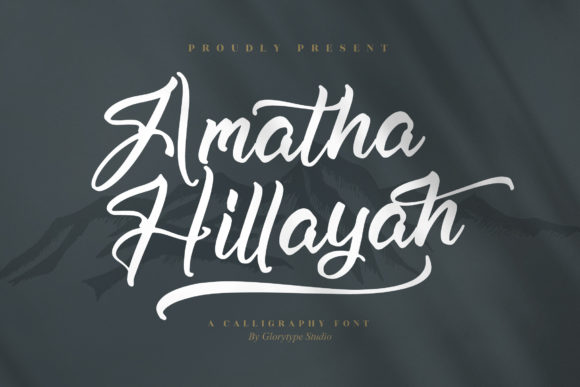
Amatha Hillayah isn't just another digital script; it carries the texture of actual bristles hitting paper. As a designer who spends hours tweaking kerning and testing legibility, I appreciate typefaces that bring immediate personality to a layout. This typeface offers a relaxed yet sophisticated vibe, making it an excellent choice for logo design where emotional connection matters. The strokes vary naturally, mimicking the pressure changes of a real brush pen, which prevents the text from looking too sterile or computer-generated.
Visual Character and Personality
The defining characteristic of Amatha Hillayah is its "paint brushed" aesthetic. Unlike clean, geometric sans serifs or traditional serifs that rely on sharp contrast, this font thrives on organic imperfection. It feels warm, approachable, and distinctly human. When I placed it on the initial logo draft for the skincare project, it instantly softened the overall brand perception. It suggested that the products inside the packaging were crafted with care, not mass-produced in a factory.
For designers working in the Script Handwritten category, finding a font that balances readability with artistic flair can be tricky. Amatha Hillayah manages this well. The loops are open enough to remain legible even at moderate sizes, but tight enough to maintain a cohesive flow. It works beautifully as a display font for headlines, social media graphics, and packaging labels where you want to capture attention without shouting.
Real-World Application in Brand Identity
Testing a font in a vacuum is one thing; seeing how it performs across a full brand identity system is another. During my review process, I applied Amatha Hillayah to various touchpoints to gauge its versatility:
- Packaging Design: On the product label mockup, the font's textured edges added a tactile quality that flat colors couldn't achieve. It looked particularly striking against a matte finish background.
- Social Media Graphics: For Instagram stories and posts, the font served as a perfect accent. It drew the eye to key phrases like "New Arrival" or "Handmade" without overwhelming the imagery.
- Business Cards: Printed on thick cardstock, the varying stroke widths gave the impression of custom lettering, elevating the perceived value of the business card.
- Web Design: In the website header, it functioned well as a hero element. However, I ensured it was used sparingly to maintain load times and readability on mobile devices.
This premium font shines when used for short phrases, logos, and titles. It is not designed for long body text or dense editorial content. Trying to force it into paragraphs would hurt readability and fatigue the reader. Instead, treat it as the star of the show, pairing it with a reliable supporting cast.
Technical Features and Usability
From a technical standpoint, Amatha Hillayah is a pleasure to work with. One of the standout features is that it is PUA encoded. For those who might not be deep in the technical weeds, PUA (Private Use Area) encoding means you can access all the alternate glyphs, ligatures, and swashes easily without needing complex OpenType panels or special software shortcuts.
In practice, this saved me significant time. I could quickly swap out a standard "a" for a more decorative alternate to improve the flow of a wordmark, or add a fancy swash to the beginning of a headline to create a custom feel. This level of control is crucial for creative font users who need their work to look unique rather than generic. Having these options readily available allows for rapid iteration during the brainstorming phase of a project.
Font Pairing Strategies
No font exists in isolation. To make Amatha Hillayah truly sing, you need to pair it with the right counterparts. Because of its organic, brush-style nature, it pairs exceptionally well with clean, modern sans serif fonts.
In my skincare project, I paired it with a geometric sans serif for the ingredient lists and informational text. The contrast between the fluid, handwritten style of Amatha Hillayah and the rigid structure of the sans serif created a balanced visual hierarchy. The script provided the emotion and brand voice, while the sans serif ensured clarity and professionalism.
You could also experiment with a low-contrast serif font for a more classic, editorial look, perhaps for a bakery or a wedding stationery suite. However, avoid pairing it with other overly decorative scripts, as this can create visual clutter and confuse the viewer. Let Amatha Hillayah be the primary voice and use simpler modern typography systems to support it.
Limitations and Best Practices
While Amatha Hillayah is versatile, it does have boundaries. It is fundamentally a decorative font meant for display purposes. If you are designing a legal document, a corporate annual report, or a user interface that requires small text sizes, this is not the right tool. The brush textures that give it character can become muddy and illegible when scaled down too far.
Before finalizing any client work, always test your design assets in the actual environment where they will live. Print a sample of the packaging label at 100% scale. View the website header on a smartphone screen. Check how the font renders on different operating systems if you are using it for web projects. What looks great on a high-resolution monitor might lose definition on a printed flyer or a low-res social media thumbnail.
Additionally, always verify the licensing terms before using Amatha Hillayah in commercial projects. Whether you are creating merchandise for a print-on-demand store, designing a logo for a paying client, or building a template to sell online, understanding the license is non-negotiable. Ensure your usage aligns with the creator's permissions regarding commercial font usage to protect both yourself and your clients.
Final Verdict for Designers
Amatha Hillayah is a robust addition to any designer's toolkit, specifically for projects requiring a touch of humanity and artisanal charm. Its ability to convey warmth while maintaining a chic aesthetic makes it ideal for lifestyle brands, creative studios, and handmade goods. The inclusion of PUA encoding simplifies the workflow, allowing designers to focus on creativity rather than technical hurdles.
If you are looking for a handwritten font that can elevate a logo, add flair to packaging, or bring personality to social media content, this typeface delivers. Just remember to respect its limitations regarding size and context, and pair it wisely to create a harmonious and effective brand identity.